
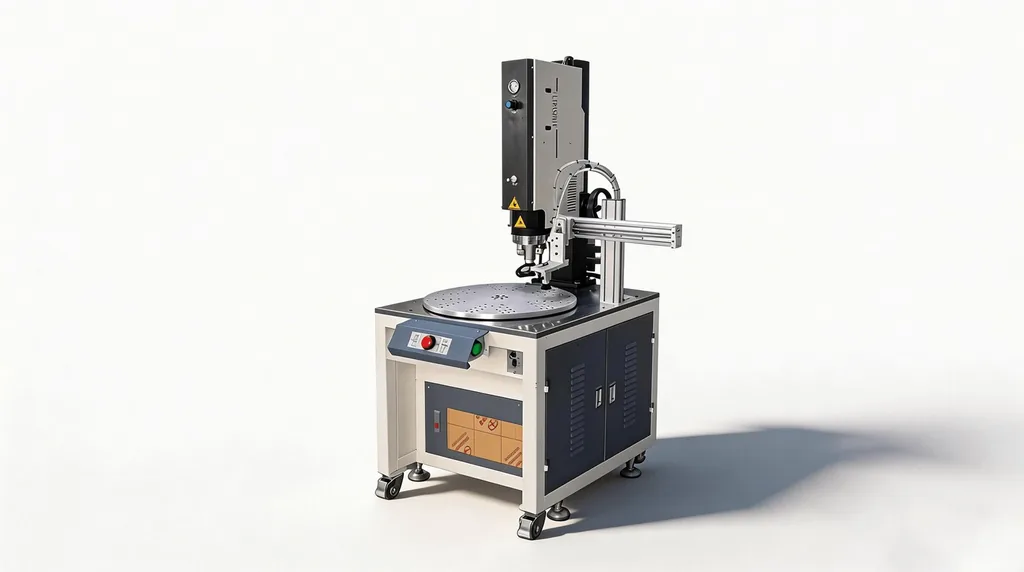
Cylindrical lithium-ion battery modules—spanning 18650, 21700, and 4680 cell packs for EVs, e-bikes, power tools, residential energy storage (BESS), and robotics—rely on precision flame-retardant UL94 V-0 PC/ABS, PC, or PP-GF top-and-bottom cell-holder spacer frames to lock individual cells into rigid geometric grids with strict electrical creepage isolation. When assembling compact-to-medium cell-holder trays, joining Busbar/CCS carrier snap plates, or locking modular cell-spacer clips together, ultrasonic welding battery cell holders delivers clean 0.2–1.0 second structural bonds with zero adhesive curing and zero metallic fasteners that risk internal short circuits. SHNEHP engineers closed-loop digital ultrasonic presses (XNC-400, XN-3, XN-5) and multi-head robotic ultrasonic cells built for cleanroom battery pack lines.
The part and its welding challenges
Joining precision cylindrical cell-holder frames and modular BMS/CCS sensor carriers creates five high-stakes battery safety and dimensional hurdles:
- Protecting populated lithium-ion cells from ultrasonic vibration shock: Crucially, never transmit high-amplitude ultrasonic energy directly through live, populated lithium-ion cells without thorough qualification—excessive high-frequency resonance can damage internal cell jelly-roll tabs, micro-weld leads, or separator films. Ultrasonic welding excels on empty cell-holder sub-frames, pre-loaded modular carrier brackets, outer flame-retardant spacer clips, and compact BESS/tool holder shells where acoustic paths stay strictly decoupled from live cell cans; populated sealed battery module enclosures should instead use zero-vibration servo / non-contact IR hot plate welding or hot-air cold staking.
- Flame-retardant UL94 V-0 PC/ABS and PA66-GF brittleness: Halogen-free flame-retardant additives narrow the ultrasonic processing window and increase brittle fracture risk if energy or trigger force is oversized.
- Tight cell-pitch tolerance (±0.15 mm) for automated busbar laser welding: Downstream laser welding of aluminum/nickel collector plates depends on exact cell-center pitch across the holder grid; uneven ultrasonic collapse skews cell alignment and triggers busbar misfires.
- Zero loose plastic flash or glass-fiber dust inside live cell compartments: Abrasive flash particles sitting between cell cans and thermal-interface potting pads compromise dielectric insulation.
- Acoustic near-field limit (≤6 mm) on oversized EV module frames: Compact 10-to-60-cell tool/e-bike holders fit single 15/20 kHz horns cleanly, whereas wide 500+ mm EV cell-holder trays require multi-head ultrasonic banks or servo hot plate welding.
Why ultrasonic welding (vs. alternatives)
| Process | Fit for battery cell holders & CCS carrier brackets | Speed & cell-safety boundary | Typical cycle time | Engineering boundary |
|---|---|---|---|---|
| Precision 15–35 kHz ultrasonic welding (XNC-400 / XN-3 / XN-5) | Top high-speed choice for empty cell-holder sub-frames, interlocking modular cell clips, CCS busbar carrier brackets, and compact tool/e-bike holder cages | Sub-second cold cycle; zero glue VOCs; zero metal screw short-circuit risk | ~0.2–1.0 s/weld (~4–10 s total) | Keep acoustic path strictly isolated from live cell jelly-rolls; oversized >300 mm frames need multi-head banks or hot plate welding |
| Servo / non-contact IR hot plate welding (XNS5-B / XNS6-B / XNS8-B) | Large >300 mm EV battery cell-holder trays, liquid-cooled module housings, and sealed populated enclosures | Zero mechanical vibration; handles wide flame-retardant PP-GF / PC-ABS frames and full IP67 perimeter seals | ~18–32 s | Longer cycle time for tiny discrete modular cell clips |
| Hot-air cold staking | Locking flexible FPC/CCS busbar sensor strips and BMS terminal covers directly onto populated battery modules | Zero vibration, safe directly on top of live lithium cells and delicate NTC thermistors | ~6–14 s (all bosses simultaneous) | Requires molded bosses protruding through mating FPC/busbar holes |
| Snap-fits & self-tapping screws | Serviceable prototype battery trays | Removable mechanical joint | ~15–40 s | Metal screws introduce conductive drop/short hazards; plastic snaps creep and rattle under EV road vibration |
Typical process window (industry ranges)
Ultrasonic welding of flame-retardant battery cell holders relies on rigid anti-deflection nests, balanced energy-director ribs, and closed-loop collapse-distance control to hold exact cell-pitch geometry. Baselines below are verified during a SHNEHP trial.
| Parameter | Typical industry range (UL94 V-0 PC/ABS / PC / PP-GF) | Engineering guidance |
|---|---|---|
| Operating frequency | 20 kHz (compact tool/e-bike cell cages & CCS brackets), 15 kHz (wider rigid empty trays), or 30–35 kHz (delicate sensor/FPC retaining tabs) | Higher 30–35 kHz minimizes transmitted shock near BMS sensor harnesses |
| Joint design | Step joint with 60°–90° energy director (0.35–0.55 mm) for PC/ABS; enclosed shear joint for semi-crystalline PP-GF | Enclosed step/shear pockets keep flash 100% trapped away from cell bores |
| Control mode & weld time | 0.2–1.0 s in closed-loop collapse distance mode with strict energy & power windows | Locks final cell-holder height within ±0.05–0.10 mm for downstream automated laser busbar welding |
| Tooling & wear resistance | Hardened steel or titanium FEA-slotted horns + precision-pinned ESD-safe aluminum/PEEK fixtures | Resists abrasive wear from glass-filled/mineral-filled flame-retardant resins |
| Hold time | 0.3–0.7 s | Solidifies rigid UL94 V-0 PC/ABS seams without spring-back micro-cracking |
Recommended SHNEHP machine and fixture setup
SHNEHP configures rigid digital ultrasonic welding machines plus multi-head battery assembly stations:
- Benchtop & modular cell-holder lines: XNC-400, XN-3, and XN-5 digital auto-tuning ultrasonic welders feature 0.01 mm optical collapse encoders, upper/lower energy/depth/time quality gates, and cleanroom acoustic enclosures.
- Multi-head & ESD-safe battery fixtures: Custom welding and testing fixtures integrate insulated ESD-dissipative PEEK/delrin cell-pitch alignment pins, poka-yoke cell/bracket orientation switches, and multi-head gantry layouts inside turnkey customized machines.
- Honest cross-process guidance: When a battery program requires sealing directly around live populated lithium cells or oversized 400–800 mm trays, SHNEHP provides zero-vibration XNS5-B / XNS6-B hot plate or hot-air cold staking alternatives from the same engineering team.
Quality and leak testing
Battery cell-holder lines enforce strict dimensional, mechanical, and cleanliness checks:
- 100% collapse-height & energy gating: Every weld logs peak power, joules, and final stack height directly to plant MES, automatically quarantining any holder with an out-of-tolerance pitch or short-shot rib.
- Drop, vibration & dielectric qualification: Batch destructive wedge-break tests verify cohesive flame-retardant parent fusion, backed by UN38.3 / GB 38031 random-vibration simulation and cleanliness audits confirming zero loose flash specks.
FAQ
Is ultrasonic welding safe for battery cell holders that already contain live lithium-ion cells? High-amplitude ultrasonic vibration transmitted directly through populated lithium-ion cells can risk internal tab fatigue or separator micro-damage. Ultrasonic welding is safest for empty cell-holder sub-frames, interlocking modular clips, and decoupled outer brackets; when joining directly on top of live populated cells, SHNEHP recommends zero-vibration hot-air cold staking or non-contact IR / servo hot plate welding.
How does ultrasonic welding maintain exact cell-center spacing for downstream laser busbar welding? By seating the holder on hardened pitch-datum alignment pins and terminating every weld via a 0.01 mm closed-loop collapse-distance encoder, overall frame flatness and cell-pocket concentricity remain consistent across every cycle.
What flame-retardant plastics work best for ultrasonic battery cell holders? Amorphous UL94 V-0 PC/ABS and PC weld cleanly with step-and-energy-director joints; semi-crystalline PP-GF or PA66-GF holders require enclosed shear joints, higher amplitude, and wear-resistant titanium or hardened-steel horns.
When should we choose hot plate welding instead of ultrasonic welding for battery cell holders? Choose servo hot plate welding when cell-holder frames exceed ~250–300 mm in span, require continuous liquid-tight perimeter sealing for immersion/coolant cooling, or must be welded around live populated cells with zero vibration.
What CAD files should we send for a SHNEHP battery cell-holder evaluation? Share 3D STEP/X_T models of the holder halves (noting whether cells are loaded pre- or post-weld), exact UL94 V-0 resin grade, critical cell-pitch tolerances, and target hourly volume.
Get a free weld trial
Send your battery cell-holder or CCS carrier CAD models to SHNEHP engineering to confirm safe ultrasonic vs. hot-plate/hot-staking process selection, optimize joint flash traps, and run physical sample trials:
- 3D STEP / X_T / IGES models of cell holder, spacer clips, and CCS carrier
- UL94 V-0 resin grade (PC/ABS, PC, PP-GF, PA66-GF) and assembly sequence (empty vs. populated)
- Target hourly output (UPH) and cell-pitch dimensional specs
Email yy@nbxiaoneng.com or connect through our contact page.
Request a Technical Consultation & Free Weld Trial
Send your 3D STEP/X_T drawing, resin grade, target cycle time, and leak-test specification. Our engineers will evaluate the joint and recommend a practical SHNEHP machine and fixture setup.