
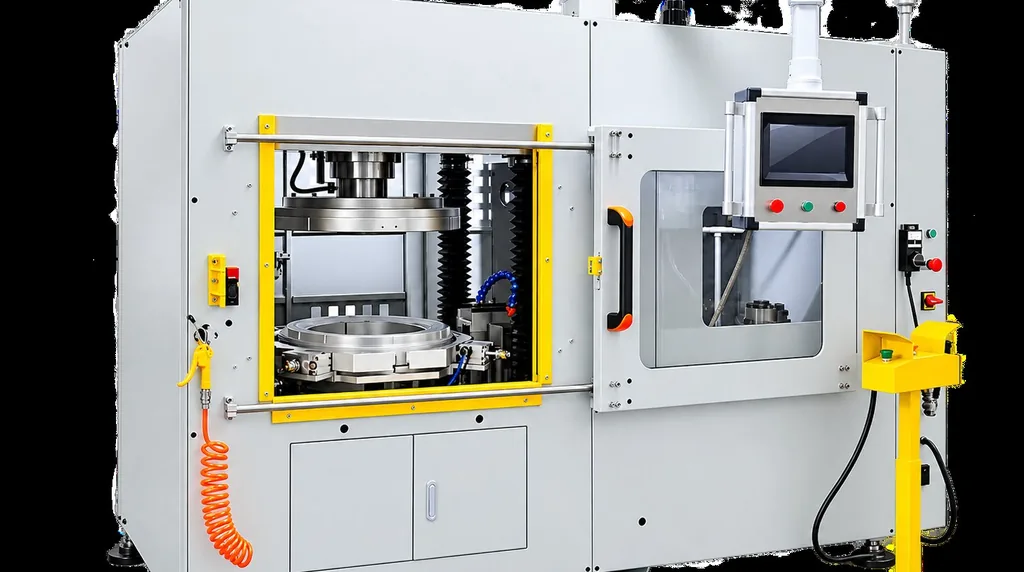
Electric-vehicle battery packs, swappable 48V–72V e-mobility packs, and commercial energy-storage (BESS) modules contain an entire ecosystem of safety-critical thermoplastic assemblies: UL94 V-0 cell-holder trays, busbar/CCS insulating frames, high-voltage BDU/BMS enclosures, explosion-proof breather valves, and liquid-cooling manifold trays. Scaling these safety-regulated assemblies to gigafactory volumes demands strictly repeatable welding curves, zero conductive/foreign-object debris (FOD), ESD/high-voltage isolation, and 100% serialized MES traceability from raw molding to final pack-out. Deploying custom automation ev battery pack welding unites zero-vibration non-contact IR / servo hot plate welding, linear vibration welding, hot-air cold staking, vision poka-yoke, FIFO cooling, and 10–30 kPa IP67/IP68 dry-air leak testing inside one turnkey SHNEHP customized machines production cell.
The part and its welding challenges
Automating thermoplastic battery-pack sub-assemblies and module enclosures requires mastering five specialized EV gigafactory demands:
- Zero-vibration joining around populated lithium-ion cells & sensitive BMS electronics: Once live cells or populated BMS/CCS sensor PCBs are loaded, high-G mechanical shaking is unacceptable; automated cells pair zero-vibration non-contact IR / servo hot plate welding (for enclosure sealing) with multi-point hot-air cold staking (for CCS busbar/FPC and terminal-cover retention).
- Cleanroom foreign-object debris (FOD) and dielectric isolation: Even a tiny metal burr or stray glass-fiber flake inside a 400V–800V battery housing risks insulation breakdown; non-contact IR heating eliminates PTFE flaking and resin stringing while ESD-safe insulated PEEK/Delrin robot grippers and fixtures protect live surfaces.
- Integrating high-temperature UL94 V-0 flame-retardant resins: EV battery housings rely on flame-retardant PP-GF30, PA66-GF30, PBT-GF30, and PC/ABS V0 that demand closed-loop moisture-aware recipes, 300–500 °C non-contact IR above ~270 °C, and rigid servo clamping.
- Thermal stabilization before strict IP67/IP68 and coolant leak testing: Automated FIFO cooling buffers equalize newly welded enclosures before dual-circuit leak benches verify both 10–30 kPa / 0.1–0.5 mL/min air tightness and 100–300 kPa liquid-cooling channel integrity.
- Full EV safety MES serialization (battery passport readiness): Every cell holder, BDU box, and module housing is laser-etched or scanned with a 2D DataMatrix ID binding all vision photos, weld temperature/displacement telemetry, hot-air stake logs, and exact leak-rate numbers directly into plant MES.
Why turnkey EV battery pack plastic automation (vs. alternatives)
| Architecture | Fit for Tier-1 EV battery & BESS factories | Safety traceability, FOD control & takt | Typical line takt | Engineering boundary |
|---|---|---|---|---|
| SHNEHP turnkey robotic / multi-station EV battery cell | Optimal choice for high-volume EV module housings, BDU/BMS boxes, CCS carriers, and cooling trays | Single-vendor accountability across IR/hot plate/vibration/hot-staking presses, vision poka-yoke, ESD robotics, IP67 leak benches, and MES | ~18–45 s/module | Requires frozen pack datum scheme and standardized quick-change pallet interface |
| Rotary-index compact EV component cell | High-volume EV breather vent caps, HV terminal covers, and compact BMS boxes | Ultra-compact footprint combining load, weld, cool, leak/flow test, and laser mark | ~8–18 s/cycle | Best suited to compact/medium components under ~350 mm envelope |
| Standalone manual welders + offline leak benches | Pilot battery builds, low-volume specialty packs, or early prototype lines | Lower initial capex | ~60–150 s/module | High manual FOD/handling risk, inconsistent weld-to-leak cooling times, and manual data entry gaps |
| Multi-vendor piecemeal integration | Legacy retrofits | Reuses existing presses | Variable | Integration delays, split accountability during OEM PPAP/Gage R&R, and mismatched PLC/MES protocols |
Typical process window (industry ranges)
Turnkey EV battery plastic welding lines synchronize DVS 2215 / DVS 2217 joining cores with strict vision, thermal, and leak gates. Exact station allocation and robot reach are simulated to your battery CAD during SHNEHP proposal engineering.
| Automated EV Line Station | Core Operations | Engineering Control Standard |
|---|---|---|
| Station 1: Scan, Load & Vision FOD / Poka-Yoke | 2D DataMatrix scan; 2D/3D camera checks cell-holder alignment, busbar/NTC placement, gasket/valve presence, and zero FOD | Interlock halts cycle immediately if any cell, clip, or insulator is out of position |
| Station 2: Zero-Vibration CCS / Terminal Staking | Multi-point hot-air cold staking secures FPC/CCS busbar carriers & terminal covers cleanly over live cells | Zero vibration, zero sticking on PA66-GF/PBT-GF, per-nozzle PID temp logging |
| Station 3: Primary Enclosure Sealing | XNS6-B / XNS8-B / XNS9-B servo or non-contact IR (300–500 °C) hot plate (or XN-70/100 vibration on empty trays) | Full temp, changeover (≤1.5–2.2 s), force, and closed-loop meltdown telemetry to MES |
| Station 4: FIFO Cooling & Dual-Circuit Leak Test | Indexed cooling transfer → 10–30 kPa / 0.1–0.5 mL/min (IP67/IP68 air) + optional 100–300 kPa (coolant loop) | 1 Pa differential resolution, 3–5 s stabilize, certified shift-start master leak check |
| Station 5: Vent Assembly, Laser Mark & Palletize | Automated breather-valve check, laser DataMatrix pass mark, and robotic tray pack-out | Zero-escape reject chute locks out any failed assembly |
Recommended SHNEHP machine and fixture setup
SHNEHP builds both the core plastic-joining machines and turnkey EV automation cells under one roof inside our customized machines division:
- Core joining platforms: Direct integration of XNS5-B / XNS6-B / XNS8-B / XNS9-B 3-axis servo & non-contact IR hot plate welders, XN-55 / XN-70 / XN-100 vibration welders, multi-point hot staking machines, and XNC-400 / XN-5 ultrasonic welders for empty sub-frames.
- ESD-safe & HV-insulated automation: Insulated PEEK/Delrin robotic EOAT, cleanroom HEPA laminar-flow hood options, RFID quick-change welding and testing fixtures, and dual-circuit leak benches.
- Unified gigafactory PLC & MES architecture: Siemens/Mitsubishi PLC line control with centralized recipe management, live OEE tracking, and native OPC-UA / REST / SQL battery-passport data upload.
Quality and leak testing
Turnkey EV battery lines enforce zero-escape safety validation across every serialized assembly:
- Closed-loop multi-gate interlocking: Every assembly must pass vision poka-yoke, every hot-air stake or hot-plate/IR weld curve window, and its 10–30 kPa IP67/IP68 (plus optional 100–300 kPa coolant) leak check before receiving its final PASS laser mark.
- Full FAT & Gage R&R prior to shipment: SHNEHP runs continuous production simulations and Gage R&R leak audits using customer molded UL94 V-0 housings at our Ningbo facility before shipping and on-site ramp-up.
FAQ
What thermoplastic EV battery pack assemblies can SHNEHP automate in a turnkey welding line? SHNEHP delivers turnkey automated welding and leak-testing lines for EV battery module housings, BDU high-voltage junction boxes, BMS enclosures, cell-holder trays, CCS/FPC busbar carrier frames, explosion-proof breather valves, and liquid-cooling manifold trays.
How does SHNEHP ensure zero mechanical vibration when welding populated lithium-ion battery modules? For populated modules containing live cells or BMS PCBs, SHNEHP specifies zero-vibration non-contact infrared / 3-axis servo hot plate welding for enclosure sealing and hot-air cold staking for internal CCS/terminal retention—keeping ultrasonic or vibration processes strictly on empty pre-cell sub-components.
Can one automated line switch between multiple EV battery module sizes? Yes. Standardized quick-change shuttle pallets with RFID fixture auto-recognition, quick-disconnect pneumatic/power manifolds, and multi-recipe robot programs support fast multi-platform changeovers.
How does the line prevent false IP67 leak rejects right after hot plate or IR welding? An automated FIFO cooling conveyor or buffer tower sits between the welding press and the 10–30 kPa differential leak-testing station, allowing residual weld heat to dissipate cleanly for repeatable Gage R&R.
What inputs should we provide for a custom EV battery welding automation proposal? Share 3D STEP/X_T models of your battery housings/sub-assemblies, UL94 V-0 resin grades, populated vs. empty assembly sequence, target annual volume and takt time, IP67/coolant leak limits, and plant MES protocol.
Get a free weld trial
Share your EV battery pack or BESS plastic assembly CAD files with SHNEHP automation engineering to receive a turnkey 3D cell layout, cycle-time balance sheet, and sample weld validation:
- 3D STEP / X_T / IGES models of battery housings, cell holders, and CCS covers
- UL94 V-0 polymer grades (PP-GF, PA66-GF, PBT-GF, PC/ABS) and live-cell constraints
- Target annual volume, takt time, IP67/IP68 specs, and MES standards
Email yy@nbxiaoneng.com or submit your project via our contact page.
Request a Technical Consultation & Free Weld Trial
Send your 3D STEP/X_T drawing, resin grade, target cycle time, and leak-test specification. Our engineers will evaluate the joint and recommend a practical SHNEHP machine and fixture setup.