
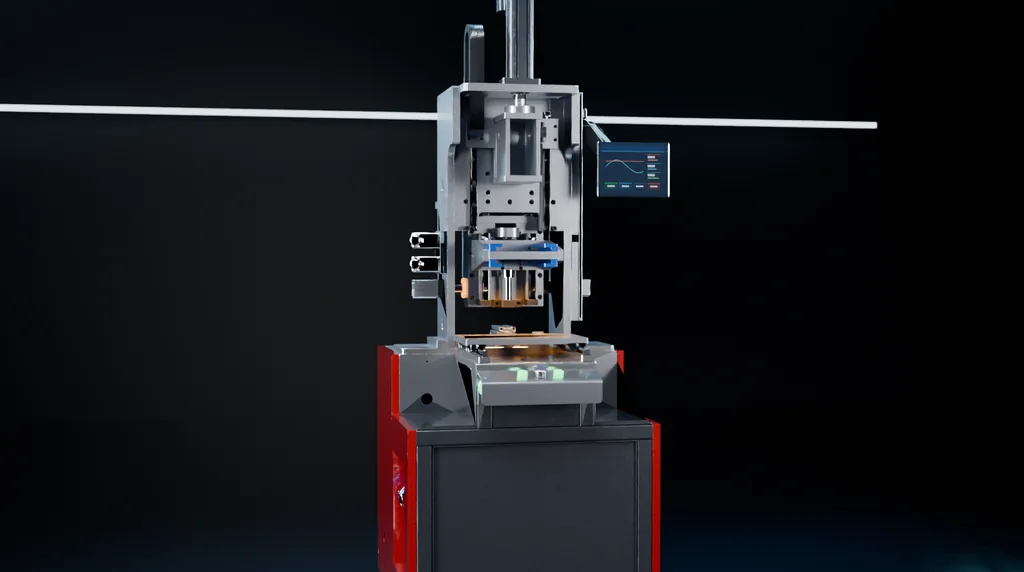
High-voltage EV battery module housings, 800V battery disconnect unit (BDU) junction boxes, BMS controller enclosures, and high-temperature flame-retardant BESS battery casings are increasingly molded from UL94 V-0 glass-filled polyamide (PA66-GF30/40), PBT-GF30, PPA, PPS, or PC/ABS to pass strict thermal-runaway fire-barrier standards. Sealing these high-temperature, abrasive glass-filled resins on traditional contact PTFE hot plates quickly exceeds the ~270 °C durability limit of fluoropolymer coatings—causing sticking, carbonized black flakes, resin stringing, and costly coating downtime. Adopting non-contact hot plate welding battery housings replaces platen contact with contoured 300–500 °C infrared (IR) radiant emitters hovering across a precise 1–2 mm air gap, delivering zero-vibration, zero-particulate, zero-PTFE-wear IP67/IP68 sealing. SHNEHP integrates modular non-contact IR radiant heating directly onto our 3-axis servo hot plate platforms (XNS6-B, XNS8-B, XNS9-B).
The part and its welding challenges
High-temperature flame-retardant EV battery enclosures and BDU/BMS boxes combine extreme dielectric cleanliness rules with demanding polymer rheology, creating five manufacturing obstacles:
- High-temp flame-retardant & high-glass-fiber resins exceed PTFE limits: PA66-GF30/40, PBT-GF30, PPA, and PPS require melt-zone temperatures well above the ~270 °C operating ceiling of contact PTFE coatings; furthermore, GF≥40% glass fibers physically abrade coated contact faces, causing rapid sticking and contamination.
- Zero foreign-object debris (FOD) and zero stringing inside HV enclosures: A single charred resin speck or loose plastic thread inside an 800V BDU relay box or BMS controller can bridge creepage gaps or foul high-voltage contactor contacts; zero platen contact eliminates stringing and particulate shedding completely.
- Strictly zero mechanical vibration near populated PCBs, relays & live cells: Unlike linear vibration or ultrasonic welding (which generate glass-fiber friction dust and shake solder joints/relays), radiative infrared heating transfers pure thermal energy gently without mechanical shock.
- Mandatory moisture control on hygroscopic PA66-GF / PBT-GF / PC-ABS: High-temperature polyamides and polyesters readily absorb shop humidity and blister during rapid 300–500 °C infrared radiation unless properly dried (80–120 °C) prior to sealing.
- Shielding internal high-voltage electronics during radiant soak: Contoured IR emitter arrays must focus radiation narrowly along the perimeter weld rib while reflective aluminum/ceramic internal shields protect populated BMS PCBs, HV busbars, and contactors millimeters away.
Why non-contact infrared hot plate welding (vs. alternatives)
| Process | Fit for UL94 V-0 PA66-GF, PBT-GF & PPS battery housings | Cleanliness, PTFE upkeep & HV safety | Typical cycle time | Engineering boundary |
|---|---|---|---|---|
| Non-contact infrared hot plate welding (XNS6-B / XNS8-B / XNS9-B + IR) | Optimal choice for high-temp (>270 °C) or high-glass (GF≥40%) UL94 V-0 battery housings, 800V BDUs, and populated BMS enclosures | Zero contact, zero stringing, zero PTFE recoating downtime, zero vibration, and crisp small minimal-flash beads | ~18–34 s | Requires contoured IR emitter machining matched to perimeter contour and uniform 1–2 mm standoff gap |
| Contact PTFE servo hot plate welding | Lower-temp PP, HDPE, or unfilled PP-T20 battery housings running cleanly below ~260 °C | Cost-effective platen build on low-temp polyolefins | ~20–36 s | Rapid PTFE blistering, sticking, and stringing on PA66-GF, PBT-GF, PPS, or GF≥40% battery enclosures |
| Linear vibration friction welding (XN-70 / XN-100) | Empty unpopulated PP/HDPE/PA battery structural trays without fragile electronics | Fast 2–5 s weld cycle | ~10–18 s total | Generates fine glass-fiber dust (FOD risk for HV relays/PCBs) and transmits mechanical shaking |
| Bolted silicone gaskets / RTV potting | Serviceable large battery pack lids | Re-openable field access | ~45–120 s + gasket/bolt BOM | High fastener count, gasket compression set over 10+ years, and ongoing RTV cure/dispensing cost |
Typical process window (industry ranges)
Non-contact infrared battery-housing sealing follows DVS 2215 radiative-heating control, keeping changeover times short so high-crystallinity PA66-GF and PBT-GF melts fuse cleanly before viscosity spikes. Baselines below are verified during a SHNEHP trial.
| Parameter | Typical industry range (UL94 V-0 PA66-GF / PBT-GF / PPS / PC-ABS) | Engineering guidance |
|---|---|---|
| Pre-weld drying | PA66-GF: 80–100 °C; PBT-GF / PC-ABS / PPS: 100–120 °C | Eliminates steam micro-blisters under rapid IR radiation and protects IP67/IP68 tightness |
| Contoured IR emitter temperature | 300–500 °C (closed-loop metal-foil, quartz, or contoured ceramic IR emitters) | Multi-zone power control guarantees uniform melt across corners and thick mounting bosses |
| Radiant standoff air gap | 1.0–2.0 mm precision clearance | 3-axis servo Z-positioning holds exact standoff without ever touching molten resin |
| Radiant soak duration | 8–18 s | Concentrated infrared radiation melts a clean 0.8–1.3 mm depth while local reflective shields protect HV electronics |
| Servo changeover time | ≤1.4–2.0 s | Fast 3-axis servo retraction prevents rapid crystallization cold-welds on PA66/PBT/PPS |
| Joining & hold phase | 0.20–0.35 N/mm² to closed-loop servo hard stop (1.2–2.2 mm collapse); hold 8–16 s | Enclosed double flash traps contain minimal molten bead cleanly inside the flange |
Recommended SHNEHP machine and fixture setup
SHNEHP engineers 3-axis full-servo hot plate welding machines with modular non-contact infrared radiant packages sized using our +60 mm tooling envelope rule:
- Compact BDU junction boxes, BMS enclosures & 48V packs: XNS5-B and XNS6-B 3-axis servo welders combine micron-level standoff repeatability, rapid servo changeover, and multi-zone IR power closed-loop control.
- Large EV battery module housings & multi-cavity BDU lines: XNS8-B and XNS9-B wide-bed servo platforms support wide heavy-duty non-contact IR modules with quick-change rolling fixture carts and robotic loading interfaces inside turnkey customized machines.
- ESD-safe & HV-shielded fixtures: Custom welding and testing fixtures integrate grounded anti-static PEEK/aluminum cradles, internal reflective heat shields blocking stray IR from BMS PCBs and contactors, and poka-yoke component presence sensors.
Quality and leak testing
Non-contact IR welded battery housings undergo 100% dry-air hermetic and cleanliness verification:
- 100% IP67/IP68 differential leak testing: After brief cooling stabilization, automated fixtures test every housing at 10–30 kPa against a 0.1–0.5 mL/min limit (1 Pa resolution, 3–5 s stabilization)—with optional dual-circuit 100–300 kPa checks if liquid-cooling passages are molded in.
- Cross-section, FOD & thermal-shock audits: Periodic destructive weld sections verify full void-free glass-fiber matrix fusion and strictly zero loose internal particulates, paired with -40 °C to +125 °C thermal shock and IP68 submersion qualification.
FAQ
When is non-contact IR hot plate welding mandatory over contact PTFE hot plates for EV battery housings? Whenever battery housings use high-temperature UL94 V-0 PA66-GF, PBT-GF, PPA, or PPS requiring heating above PTFE's ~270 °C durability limit, whenever glass-fiber loading reaches ≥40%, or whenever internal 800V relays/PCBs demand strictly zero stringing and zero particulate FOD.
Does non-contact infrared heating work on carbon-black or orange high-voltage flame-retardant battery plastics? Yes. Unlike laser transmission welding (which requires one IR-transparent half and fails on opaque pigments), non-contact infrared hot plate welding heats both opaque black and bright orange UL94 V-0 halves directly from the surface with high absorption efficiency.
How are internal BMS circuit boards and HV contactors protected from 300–500 °C IR emitters? Custom reflective metal/ceramic thermal shield baffles sit inside the upper and lower fixture nests right beside the weld rib, directing infrared radiation strictly onto the perimeter joint while keeping internal electronics cool.
Can one SHNEHP servo machine run both contact platens (for PP housings) and non-contact IR modules (for PA66-GF/PBT-GF housings)? Yes. SHNEHP XNS5-B, XNS6-B, and XNS8-B 3-axis servo frames accept modular quick-change heating cartridges, giving EV suppliers maximum multi-program flexibility on one machine footprint.
What CAD data is needed for a non-contact IR battery housing weld trial? Send 3D STEP/X_T models showing perimeter wall thickness and internal electronics clearances, exact UL94 V-0 resin grade and glass-fiber percentage, target cycle time, and IP67/IP68 leak criteria.
Get a free weld trial
Share your EV battery housing, BDU box, or BMS enclosure CAD models with SHNEHP engineering to validate zero-stringing non-contact infrared sealing on actual UL94 V-0 moldings:
- 3D STEP / X_T / IGES models of battery housing, lid, and internal PCB/contactor keep-out zones
- UL94 V-0 resin grade & GF% (PA66-GF, PBT-GF, PPS, PC/ABS)
- Target hourly output (UPH) and OEM IP67/IP68 test criteria
Email yy@nbxiaoneng.com or connect through our contact page.
Request a Technical Consultation & Free Weld Trial
Send your 3D STEP/X_T drawing, resin grade, target cycle time, and leak-test specification. Our engineers will evaluate the joint and recommend a practical SHNEHP machine and fixture setup.