
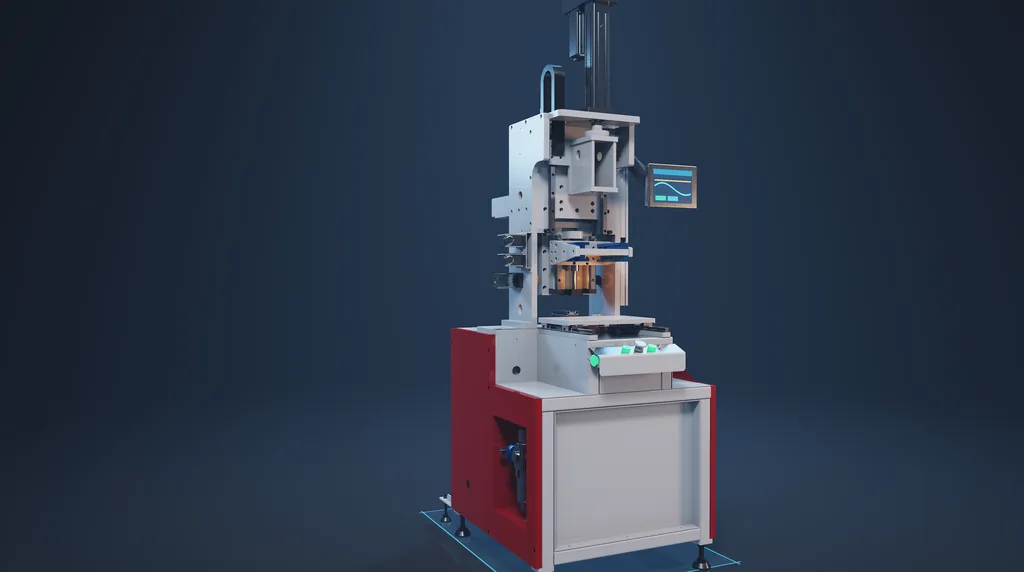
Modern direct-injection gasoline (GDI) and high-pressure common-rail diesel fuel filters protect micron-clearance fuel injectors against water droplets and sub-5-micron contaminants while containing 400–600 kPa fuel supply pressure and strict EVAP hydrocarbon permeation limits. While simple circular fuel-filter canisters can be spin-welded or flat-flange nylon housings vibration-welded, complex multi-port diesel water-separator bowls, angled SAE quick-connect filter covers, conductive anti-static PA12 / PA66-GF / POM multi-stage housings, and non-circular integrated filter-heater modules require zero-particulate thermal fusion. Applying hot plate welding fuel filters (especially non-contact infrared hot plate welding for high-temp PA66-GF and PA12) delivers high burst strength, clean internal flow paths, and strictly zero mechanical friction dust downstream of the pleated filter media. SHNEHP engineers 3-axis servo and non-contact IR hot plate machines (XNS2-B, XNS5-B, XNS6-B) built to DVS 2215 standards.
The part and its welding challenges
Automotive inline and in-tank fuel filter housings combine safety-critical hydrocarbon containment with demanding high-temperature engineering plastics, creating five production challenges:
- Zero downstream flash or glass-fiber debris (injector protection): Any loose plastic shard or glass-fiber dust entering the clean-side outlet downstream of the pleated media immediately clogs high-pressure GDI/common-rail injectors; enclosed internal flash traps and zero-contact IR heating eliminate friction dust completely.
- High-temperature conductive PA66-GF / PA12 / PPA exceeding PTFE limits: Fuel-resistant polyamides and 30–35% glass-filled PA66 require heating temperatures above PTFE's ~270 °C durability limit; switching to non-contact infrared heating (300–500 °C) prevents PTFE coating blistering, carbon specks, and sticky stringing.
- Protecting internal pleated paper/synthetic media and water-in-fuel (WIF) sensors: Diesel water separators house delicate pleated filter cartridges, internal check valves, and electrical heating/WIF sensor pins just millimeters from the weld rim; local fixture heat shields prevent media scorching.
- Mandatory polyamide drying and POM ventilation: Hygroscopic PA66-GF / PA12 must be dried (80–100 °C) or welded dry-as-molded to prevent steam porosity that fails EVAP leak limits; when welding POM fuel filters, strict time/temperature ceilings and dedicated overhead fume extraction are required.
- High burst pressure (1.5–2.5+ MPa) and ethanol/biodiesel stress-crack resistance: Fuel filters endure E10/E85 ethanol, ultra-low-sulfur diesel, and -40 °C to +110 °C under-hood vibration, demanding void-free full-wall molecular fusion.
Why hot plate welding (vs. alternatives)
| Process | Fit for automotive fuel filters & diesel water separators | Cleanliness, 3D geometry & burst strength | Typical cycle time | Engineering boundary |
|---|---|---|---|---|
| Servo / non-contact IR hot plate welding (XNS2-B / XNS5-B / XNS6-B) | Top choice for multi-port, angled-spigot, or non-circular PA66-GF, PA12, and conductive-nylon fuel filters & diesel water separators | Zero friction dust (eliminates downstream injector-clogging debris); seals 3D stepped flanges and internal divider walls simultaneously; use IR above ~270 °C | ~18–32 s (single or 2–4 cavities) | Slightly longer cycle than vibration/spin welding; requires mandatory polyamide drying and POM exhaust venting |
| Linear vibration friction welding (XN-15 / XN-35 / XN-55) | High-volume flat-plane PA66-GF or POM fuel filter housings with enclosed dust traps | Fast 2–5 s weld cycle; handles POM cleanly with fume extraction | ~8–16 s total | Generates dry friction micro-dust during initial phase (requires strict sealed inner dust traps) and cannot weld steep 3D contours |
| Spin welding (XNX-100) | Purely circular symmetric inline fuel-filter cans | Ultra-fast 0.5–3 s circular seal with servo angular indexing | ~0.5–3 s | Restricted strictly to circular weld interfaces |
| Ultrasonic welding | Tiny low-pressure small-engine inline lawn/motorcycle fuel strainers | Sub-second low-cost cycle | ~0.3–1.0 s | Insufficient burst strength and consistency for high-pressure pressurized automotive GDI/diesel filters |
Typical process window (industry ranges)
Fuel-filter thermal sealing follows DVS 2215 displacement-controlled joining with fast servo changeover to keep semi-crystalline polyamides fully fluid at contact. Exact parameters are validated during a SHNEHP trial.
| Parameter | Typical industry range (PA66-GF / PA12 / POM) | Engineering guidance |
|---|---|---|
| Pre-weld drying | PA66-GF / PA12: 80–100 °C (or dry-as-molded); POM: dry & vent exhaust | Eliminates steam bubbles that create hydrocarbon vapor leak paths |
| Heating mode & temperature | Contact PTFE (POM/PA12 below ~260 °C): 220–255 °C; PA66-GF / >270 °C: non-contact IR 320–480 °C | Non-contact IR prevents PTFE wear, carbonized specks, and stringing on glass-filled nylon fuel filters |
| Bead-up / radiant soak | Contact bead-up 0.4–0.7 mm / IR 1–2 mm gap; soak 8–18 s | Local internal tooling shields protect pleated filter media and WIF sensor connectors |
| Servo changeover time | ≤1.4–2.0 s | Fast 3-axis servo retraction avoids rapid nylon crystallization cold-welds |
| Joining & hold phase | 0.20–0.35 N/mm² to closed-loop servo hard stop (1.4–2.4 mm collapse); hold 8–15 s | Enclosed double flash traps keep clean-side fuel outlet 100% particle-free |
Recommended SHNEHP machine and fixture setup
SHNEHP configures rigid 3-axis servo hot plate welding machines for multi-cavity fuel-filter production (+60 mm platen clearance margin):
- Compact 1-to-2 cavity fuel filter cells: XNS2-B and XNS5-B 3-axis full-servo hot plate welders (or compact pneumatic XN-300C / XN-400P for low-temp grades) provide micron-accurate closed-loop collapse stops and optional non-contact IR heating heads for PA66-GF filters.
- High-volume 2-to-4 cavity Tier-1 diesel & GDI filter lines: XNS6-B servo platforms combine high parallel clamping rigidity, overhead POM/nylon fume extraction hoods, and automated transfer into inline pressure/EVAP leak stations via customized machines.
- Multi-spigot protective tooling: Custom welding and testing fixtures cradle angled SAE quick-connect ports without distortion while checking filter-cartridge presence before welding starts.
Quality and leak testing
Fuel filters require stringent dual-tier airtightness and burst validation before shipment to powertrain assembly plants:
- 100% inline pressure & EVAP leak testing: Automated multi-port fixtures check operating pressure tightness (400–600 kPa proof/decay or OEM spec) alongside ultra-sensitive EVAP differential testing at 10–35 kPa / 0.1–0.5 mL/min (with helium mass spectrometry integrated whenever OEM vapor specs fall below 0.05 mL/min).
- Hydrostatic burst & clean-side particle audits: Periodic batch samples undergo hydrostatic burst testing (1.5–2.5+ MPa), pressure-pulsation endurance, and ISO 16232 millipore particle-cleanliness wash checks on the clean-side outlet.
FAQ
Why choose hot plate or non-contact IR welding over vibration welding for high-pressure fuel filters? Hot plate and non-contact IR welding produce zero mechanical friction dust, protecting micron-clearance GDI and common-rail fuel injectors from clean-side particulate contamination, while easily sealing stepped 3D multi-port diesel water-separator flanges.
When should fuel filter lines switch from contact PTFE hot plates to non-contact infrared heating? Whenever fuel filters use PA66-GF30/35 or PPA needing heating temperatures above PTFE's ~270 °C durability limit—or whenever zero stringing inside clean-side fuel ports is mandatory—non-contact IR (300–500 °C) eliminates PTFE flaking and resin threads.
Can SHNEHP hot plate welders seal POM (acetal) fuel filters safely? Yes, with strict temperature/time ceilings and dedicated overhead exhaust extraction; however, for flat-plane POM fuel filters, SHNEHP also evaluates high-frequency linear vibration or spin welding (with fume extraction) because ultra-short 1–3 s weld cycles minimize POM thermal dwell.
How are fuel filters leak-tested inline after hot plate welding? Inline fixtures seal all SAE quick-connect nipples and execute dry-air EVAP differential pressure-decay testing (10–35 kPa / 0.1–0.5 mL/min, upgrading to helium below 0.05 mL/min) plus operating-pressure proof verification.
What CAD data is needed for a SHNEHP fuel-filter hot plate weld trial? Share 3D STEP/X_T models showing internal media clearance and SAE ports, exact resin grade (PA66-GF, PA12, POM), burst/EVAP leak specifications, and target cavities per cycle.
Get a free weld trial
Send your gasoline or diesel fuel-filter CAD assemblies to SHNEHP engineering to compare non-contact IR hot plate vs. vibration/spin welding, design clean-side flash traps, and verify burst tightness on physical parts:
- 3D STEP / X_T / IGES models of filter housing, cap, and internal cartridge clearances
- Resin specification (PA66-GF, conductive PA12, POM) and fuel-compatibility grade
- Burst pressure, EVAP leak limit, and target UPH
Email yy@nbxiaoneng.com or connect through our contact page.
Request a Technical Consultation & Free Weld Trial
Send your 3D STEP/X_T drawing, resin grade, target cycle time, and leak-test specification. Our engineers will evaluate the joint and recommend a practical SHNEHP machine and fixture setup.